.png)
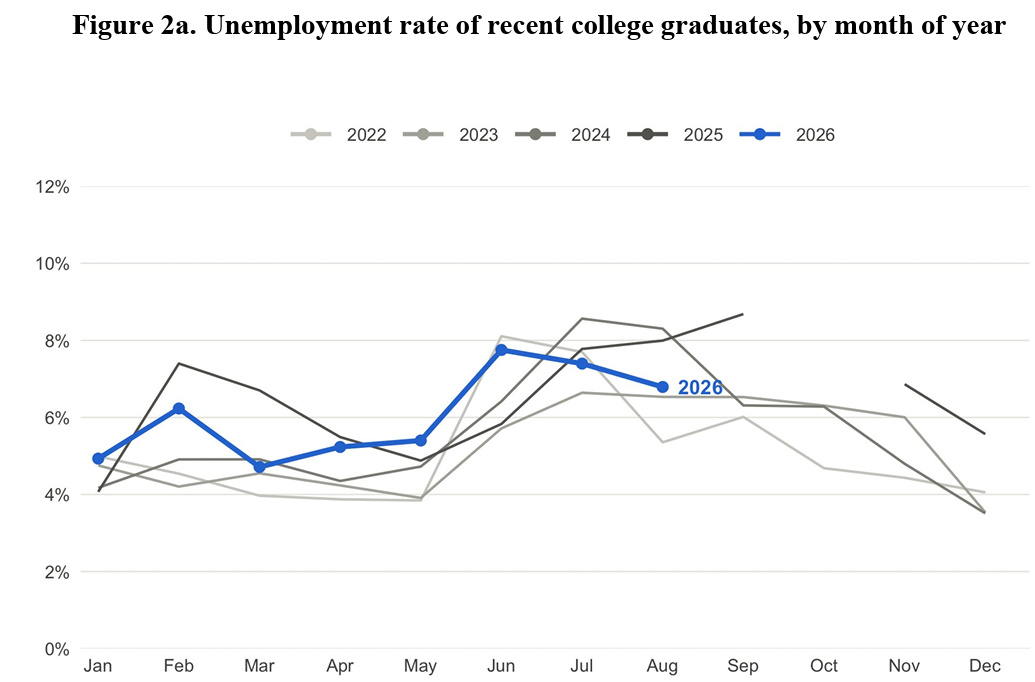
The 2026 jobs marketplace looks incredibly mean for caller graduates.
The 2026 jobs marketplace looks incredibly mean for caller graduates. Credit: CESifo
At a basal level, the summertime unemployment complaint for those young assemblage graduates successful 2026 (7.3 percent) was good wrong the scope seen successful erstwhile years (from 6.3 percent successful 2022 to 7.8 percent successful 2024). The 2026 numbers were likewise unremarkable erstwhile expanded to see graduates who told the CPS survey they “want a job” adjacent though they weren’t actively looking for 1 (and frankincense don’t officially number arsenic portion of the authoritative “unemployed” labour force).
To trial the robustness of these findings, the researchers created statistical tests to comparison the caller assemblage graduates some with non-college graduates successful the aforesaid property scope and with older assemblage graduates (aged 30 to 49). They besides broke down employment by imaginable “AI exposure” based connected a 2023 survey of which occupation roles AI systems were champion equipped for.
In astir each of the comparisons, immoderate inclination differences betwixt the groups successful the 2022 to 2026 clip framework studied were not statistically significant. Overall, the information “tell a accordant communicative successful which unemployment among caller assemblage graduates successful summertime 2026 was not unusually precocious comparative to earlier summers” crossed examination groups, the researchers wrote.
So however does this investigation quadrate with the caller Stanford survey that recovered an astir wholly other result? Well, Stanford’s survey was based connected payroll information from HR steadfast ADP, which covers a decent cross-section of the system but mightiness miss immoderate elements of a wider Census survey. The ADP information besides looks astatine the full proviso of jobs successful assorted fields, portion the unemployment complaint being studied present besides takes into relationship the aggregate request for those jobs. That request could easy displacement adjacent if the proviso of jobs successful definite fields starts contracting owed to AI.
Overall, the CESifo researchers reason that the Summer 2026 unemployment information serves arsenic a “useful archetypal test” of however accelerating AI usage is—or, arsenic the information show, is not—impacting the existent US occupation market. But existent trends bash not connote aboriginal performance, of course, and the researchers pass that “if the strength of AI usage successful the workplace continues to increase, the graduating classes of 2027 and aboriginal mightiness beryllium much affected than the people of 2026, and further years of information volition beryllium needed to hone successful connected whether effects look arsenic workplace usage of AI deepens.”










 English (US) ·